
I have been quite critical of modern science-fiction and for good reason. Examples covered on this blog include N.K. Jemsin’s woeful The Fifth Season which saw her win the once prestigious Hugo Award for best novel. She then scored a questionable hat trick after also winning for the two that followed in the trilogy. John Scalzi’s Starter Villain had almost no science-fiction elements and reads like something he lazily turned-out to fulfil contractual obligations with his publisher; yet it still managed to get nominated for best novel in 2024 and he had previously won in 2013 for Redshirts. Then there is Patrick S. Tomlinson’s In the Black which was not nominated for any awards but the fact he was ever published is egregious enough.
If it is accepted that the Hugo Awards hold the prestige they once did it would imply that two of the above authors are commensurate with pioneer authors like Robert Heinlein, Arthur C. Clarke, Philip K. Dick, Isaac Asimov and Frank Herbert as well as greats that followed after such as William Gibson, Orson Scott Card and Neal Stephenson. If you have even a little knowledge of these authors and that doesn’t sound absurd to you, then I don’t know what more to say. Of course, most of these Jemisin would dismiss as “beardy white men” without including her beardy-white-ally Scalzi. I noticed while looking that Poul Anderson never won though he was nominated multiple times and I would take the worst book he wrote over almost any by contemporary authors.
Someone else who has only been nominated is Andy Weir and unlike most contemporary authors, he actually deserved to be.
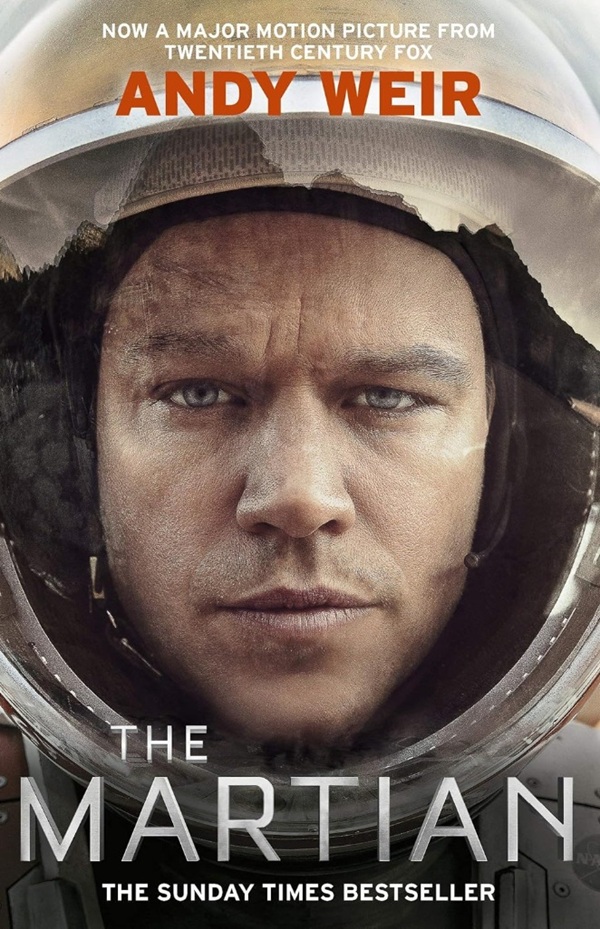
Andy Weir first came to prominence with his debut novel The Martian which was initially free on his website before being self-published on Kindle and then published “officially” in 2014. It was very soon adapted into a successful film which (at least in my opinion), was the last good film Ridley Scott directed. Despite being one of the most original and successful science-fiction novels in many years, it was not even nominated for a Hugo though the film was nominated and won.
Weir’s next novel was Artemis which despite covering some of the unwritten pre-requisites of having a female-protagonist who was also a “person of color”, was not nominated for a Hugo Award.
His most recent novel Project Hail Mary was nominated for a Hugo Award in 2022 but it didn’t win. It was adapted into another very successful film directed by Phil Lord and Christopher Miller; an achievement which also proved The Martian was no fluke.
While the Hugos may have snubbed him, he was not without other awards having received the John W. Campbell award for best writer in 2016 and a number of others including two Dragon Awards for Artemis and Project Hail Mary.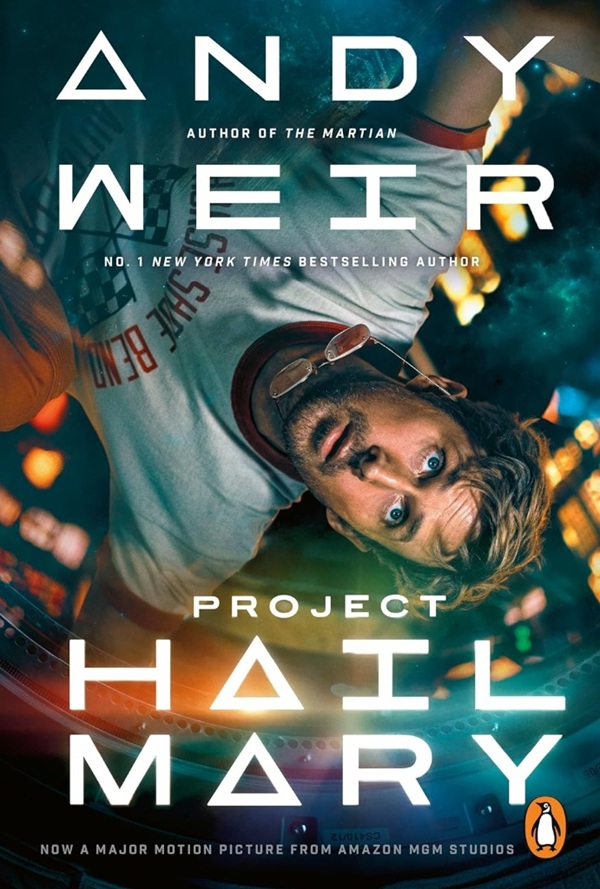
My own experience with the author goes back to ten years or so when I watched The Martian (I believe), on a plane and quite enjoyed it. I remember hearing about Project Hail Mary when it was published but ignored it until the positive buzz around the film this year. After seeing an engaging interview with him and The Critical Drinker, I decided it was time I gave his novels a read.
I first went to see if they were available in my library and they were but unlike so much contemporary science-fiction, they were all checked out with multiple reservations. I made mine anyway as there were many copies of both The Martian and Project Hail Mary. The Martian became available first after a month or so and it made an uncomfortable international flight much better as I read the entire novel during the flight; having only started it the night before I flew out.
Project Hail Mary became available soon after I returned home and also after I saw the film; which was made available on Amazon Prime last month. This means I read both novels after seeing the film adaptations which I usually like to avoid doing if possible.
While it has been around a decade since I saw The Martian, Project Hail Mary was much fresher in my mind as I quickly read through it towards the end of June. It helps that both films were quite faithful to the source material and were excellent films in their own right. As I read these one after the other and they’re well known, I am more interested in sharing some general impressions that cover both rather than reviewing both individually.
Weir reminds me somewhat of the now greatly missed Michael Crichton with his ability to have his characters explain otherwise complicated or obscure concepts in engaging ways that the average reader can follow. Crichton’s best known books were generally contemporary thrillers with science-fiction concepts while Weir’s two novels are hard sci-fi in contemporary settings. Crichton also took great liberties with the scientific concepts he used while Weir restrains himself by what is believed possible though with liberties where necessary. They are both engaging writers though and this is my main point of praise for Weir.
In both novels, Weir’s protagonists are loner science enthusiasts; Mark Watney in The Martian is not alone by choice but the novel indicates he is unmarried. Similarly, Ryland Grace in Project Hail Mary is also unmarried and comes into the story due to his theories about biology that contradict mainstream science. The author himself now has a wife and one child but this came after the success of his debut novel. Both Mark and Ryland also have a very similar sense of humour and it is quite evident in the interview I referred to that they get it from the author. At least on the surface, they are self-inserts but not in the obnoxious way often see in other works and the similarities with the author aide the narrative voice of both novels. I have not yet read Artemis which has a female protagonist but I will be interested to see whether the protagonist shares any similarities with the author despite her sex and ethnic background.
The above should not be read as a criticism but there were some aspects of both novels that I didn’t appreciate which is unfortunately also shared with many contemporary novels. There is far too much profanity and toilet humour which while realistic in a contemporary setting, is not necessary for either novel to work. As vulgar as society has become, the average person can speak a great deal without swearing. I also noticed some perverse innuendo which I hope went over the head of my eldest child when I allowed him to read them too.
The more interesting aspects of both novels is how close Weir tries to stick to mainstream scientific knowledge. I understand he has made errors and also taken some liberties for the stories to work but this is even more true of the best novels in the genre. The Martian is more of a Robinson Crusoe in space and is the most closely grounded in current scientific reality. Project Hail Mary had the more difficult task of adding interstellar travel and alien lifeforms among other concepts and I think this makes it the better of the two when critiqued strictly within the genre. The thought Weir put into the biology of and the potential for communication with alien life is better done than anything I’ve previously read. A lot of science-fiction assumes you’ll be along for the ride without too much explanation but Weir really wants his stories to be both fantastic and plausible which paired with his engaging writing and relatable characters, explains their mainstream appeal.
With all the the effort at making the narrative plausible, I did think he added a few too many difficulties for his protagonists to overcome in both. I won’t spoil either ending for any who may not have read them but I think they both could have satisfyingly ended without the additional complications that arise towards the end of both novels.
So while I have understandable contempt for the direction much of the genre has taken today, it is good to know that one of the most popular living authors still has a healthy respect for what it should be.