
I’ve shared some observations about video game remakes and remasters including in my post on the games I played in 2023, but I’ve never had a post dedicated to the subject. Something I think still needs to be frequently clarified is the difference between a remake and a remaster which can be blurry at times. The latter should be the same game only modified to play on modern systems. Textures and the user interface can be upscaled or redrawn and there can be other quality of life improvements, but it should be the same game. These releases are usually welcome as there are quite a few great games that can not be easily obtained or played at all anymore on modern hardware. It helps also that re-releases are much cheaper than making entirely new games so many publishers are opting to re-release older games. Sometimes these are excellent and sometimes they aren’t but on the whole, it is a good thing to make classic titles more widely available.
Remakes on the other hand are a bit more controversial. After all, if a game really is great, does it need a remake? I would say that the remake of Resident Evil 4 was not necessary as the first one still looks and plays great from my perspective. But then, I have to remember that I played it when it was new and know the game really well. Newer players used to constant tutorials and yellow paint spread everywhere to guide progression, might find the original harder to appreciate today. I recall back as early as 2009 there being complaints about not being able to move and shoot in Resident Evil 5 which mostly adopted the same control scheme. And just a year after Resident Evil 4, Gears of War gave players much better third-person mechanics with an intuitive over-the-shoulder combat and cover system that became widely copied. Resident Evil games even incorporated some of these mechanics in subsequent titles as the series became more action orientated. So games can age quickly and it is true in some sense that “you had to be there” for many popular titles and this even applies to me with many old PlayStation titles including the original Resident Evil games.
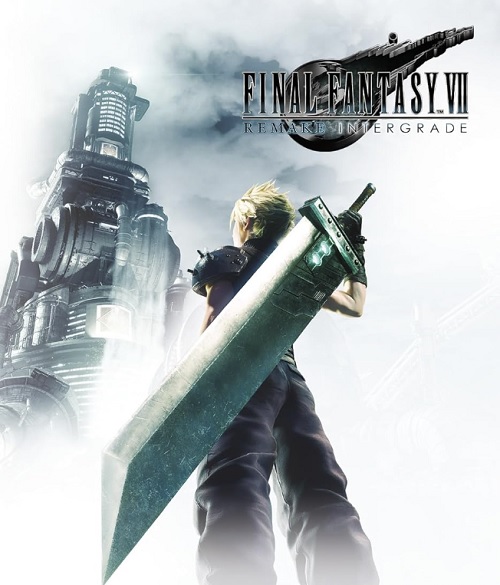
One title that has seen calls for a remake since one was announced and then aborted in the early 2000s was 1997’s Final Fantasy VII for the original PlayStation. The 2020 remake is the main subject of this post.
I played the original Final Fantasy VII on PC just over a decade after release but years before this, from a visual standpoint, the game had already aged badly. I recall being very unimpressed with the in-game visuals at the time though the pre-rendered cutscenes held up better for a little longer. This alone led to calls for a remake but it was also helped by the spin-off games released in the following years and definitely with the sequel film Final Fantasy VII: Advent Children which showed what might be possible on future hardware. All of this remained as little more than hopes, speculation and rumours until a tech demo running on the then upcoming PlayStation 3 was shown in 2005. Square Enix quickly had to assure the initially jubilant fans that it was just a “tech demo” and the PlayStation 3 instead received Final Fantasy XIII and two direct sequels. Even without hindsight, the PlayStation 3 would have been the best place to see a fully voiced remake of Final Fantasy VII instead of Final Fantasy XIII and it’s two sequels.
It ended up being a few years into the console life of the PlayStation 4 that a remake was finally announced but not in the way most hoped. One thing that has held up very well in Final Fantasy VII is both the gameplay and the content within. What I and I’m sure many would have thought ideal, would be the same game only with much improved visuals, an orchestral soundtrack and voice acting; the parts really lacking in the original and especially so today. This is not to say that there couldn’t have been tweaks or little additions but the game mechanics were fine as they were and certainly held up well when I originally played it. Yet, when it was finally announced in 2015, it was soon revealed that it was not the remake most fans would have preferred.
Perhaps taking a leaf from Peter Jackson adapting a children’s book of about three hundred pages into three torturously long films, Square Enix opted to release the game in three parts with only two having been released as of writing. The first released five years after being announced and the second in early 2024. The third is expected to be announced some time this year and may release early next; to coincide with the thirtieth anniversary of the original. I didn’t play either game on release as they were both initially exclusive to PlayStation consoles. This was not the only obstacle though as I was already put off by the staggered release though I expected each game would still provide plenty of content. The first part was announced for the Switch 2 last year and released in January this year and seeing it available relatively cheaply, I decided to give it a shot.
When I first heard the announcement, I assumed the developers were ambitious and planned to turn the city of Midgar into a giant open world for the remake. This would certainly have gone a good way to justifying splitting one game into three. However, this is far from the case and the game is instead only the Midgar section of the original with some of the most outrageous padding I have ever experienced in a video game. Many of the smaller sections of the original that simply had to be traversed, now include braindead puzzles that do nothing but slow player progress. Minor characters like Biggs, Wedge and Jessie now have expanded roles in the story and there are even a number of significant story changes from the original.
Though I have started negatively, I have to say that I was initially enjoying the game a lot. The first third or so of the game (though certainly padded), was engaging. The visual design, voice work and soundtrack is exactly what I hoped for in a remake too. All the major characters that appear are beautifully designed and animated and the voice actors were well-chosen. The moments spent in the upper areas of Midgar are great and I was truly impressed with how well they re-designed many of the famous sections of the original.
By about a third of the way in though, it was clear the game wasn’t going anywhere and this would have been very clear to those who didn’t know it was only “Part 1” of three. Although it was no secret the game was going to be split, I expect many casual consumers who bought the game on release, weren’t aware of this. There is nothing on the box that indicates it is only a portion of the original game. It is called Final Fantasy VII Remake without any disclaimer and this is still true of the Switch 2 release that came five years later. The game sold very well on release but the second part Final Fantasy VII Rebirth, saw a significant drop in sales which I believe can be attributed to the deceptive advertising of the first.

This is by far the biggest problem with the game. By the end I was more convinced than at the beginning, that it was not enough of a game to justify being a standalone title. You could argue that the time spent makes it worth it but almost all of this can be attributed to padding. There are many, many areas where characters simply run in straight line through copy and pasted ruins or industrial complexes. When not travelling down straight corridors with some minor detours for items, you’re going up and down ladders or your progress is blocked by yet another mindless puzzle. Many of these areas are returned to more than once and for no good reason. There is no way to fast travel between any of these areas—even in the chapters where the player is more free to explore. The included side-quests are nearly all fetch quests or item hunts and add very little to the game. Outside of a few of the more iconic areas such as the ruined church where Cloud first meets Aerith, the Wall Market, and the few times you’re in the higher areas of Midgar, most of the areas are also quite bland. This is also true of NPCs outside of the main characters which noticeably lack visual detail and animations.
The combat is real-time instead of turn-based which is the trend the series has been heading in for a while. My preference would certainly have been for the game to retain the turn-based combat found not only in the original but in the better Final Fantasy games up until Final Fantasy X. The real time battles still include Limit Breaks and Materia remain integral to combat. Initially, enemies can be beaten easily with standard attacks but a more tactical approach is needed later on unless (I assume), you play on the easier difficulty. After completing the game once, a hard mode and another scenario with Yuffie is unlocked (which was originally DLC), but I was more than done with it by the end credits. In truth. in the last three or four chapters, I just wanted it to be over and I now have little desire to try the sequel which is supposedly even more padded than this was.
Final Fantasy VII Remake could easily have been one really good game if it had stayed true to the original vision with improved audio, visuals and the inclusion of voice work. Final Fantasy VII is an example of a game that deserved a proper remake. One that wouldn’t lessen what was achieved with the original but remind or show audiences old and new why it was so special. I hope that once the third game releases, that modders are able to make a slimmed down version but it is unlikely a company like Square Enix will allow this to happen.
I have included the video below which came out as I was writing this, as it discusses remakes and remasters and I am in agreement with his conclusions.