Having finished my playthrough of this game a few weeks ago, I decided my thoughts beyond those I wrote earlier were worth expanding on. As this game has been out for almost a year and has been widely discussed, I will not be delicate about spoiling the story especially as the “big reveal” around the game’s climax is something I want to write about. I will also do some of the conventional analysis of the gameplay, visual and sound design as well. But if you’re someone who might want to play it and doesn’t want the game “spoiled” then you have been warned.
One of the worst endings I can remember to a game from when I was younger was the ending to Super Mario Bros. 2. This revealed all the events of the game to be merely the dream of a sleeping Mario. I still felt this despite it being a platformer where the story is not even of secondary importance and exists as a minor motivation for the player and little more. Even acknowledging this, an ending like this was still deeply dissatisfying.
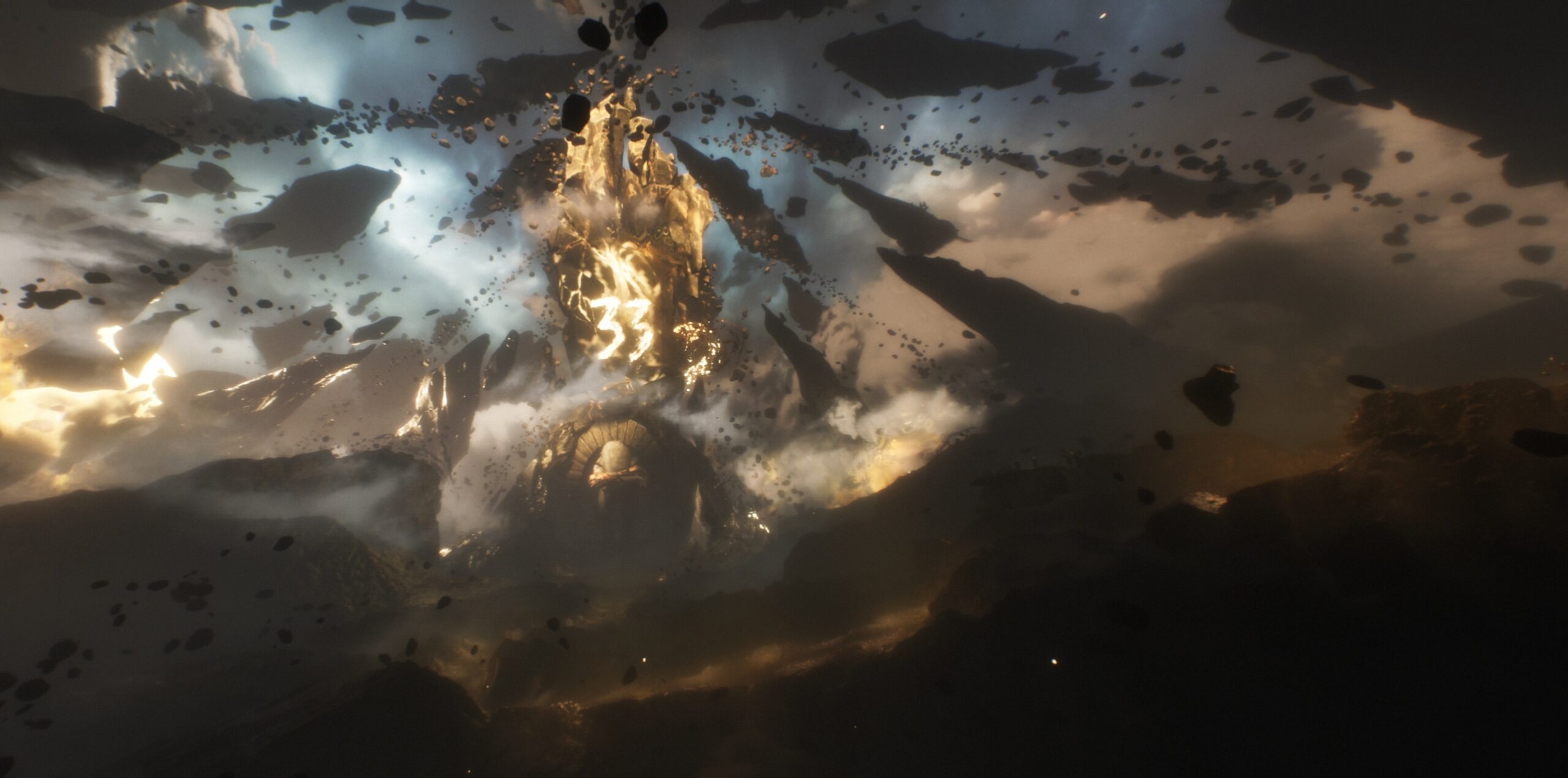
How does the above relate to Clair Obscur: Expedition 33? Well, because there is a similar rug-pull at the end of the game’s second act. The titular Expedition 33 is introduced as the latest of many expeditions who attempt to stop the Paintress who has appeared after an earlier event known as the ‘Fracture’ that has left the city of Lumière and its inhabitants isolated from the rest of the now twisted and fractured world. A year event called the ‘Gommage’ sees the Paintress lower the number on a giant monolith in the distance. Anyone whose age matches the number on this monolith, ceases to be by disappearing in a cloud of flower petals. Initially, the reason for all this and the motivation of the Paintress is unknown to the characters. This is a perfectly serviceable set-up for an RPG and thematically similar to many JRPGs only with a French twist.
It is unfortunate then that one of the most disappointing aspects of Expedition 33 is that at what should be the game’s climax, the world and characters are revealed to be nothing but the inventions of the Paintress and her family. The mysterious antagonist who wipes people out at the stroke of her brush each year is in reality just a grieving mother trying to hold this world together out of grief for a lost son. Though I didn’t guess this twist myself, that the world is simply a living painting was guessed by many players and perhaps I erred in expecting something more… unexpected than what was. I fully expected a big twist towards the end but not one that would undermine everything the characters had been fighting for up to that point. With hindsight, the Paintress wiping multiple characters out with the stroke of a brush in the game’s opening should have made the revelation obvious but I was still expecting something different right up until the end of the second act. The idea I had in mind was that the ‘Fracture’ was a cataclysm in the real world that twisted it into the bizarre landscape the characters traverse. Something caused by a dimensional merge or something else with the Paintress as the source.
This revelation is worsened by Renoir, the game’s more immediate antagonist seeking to do exactly what the more final of the game’s two possible endings offer. You have the option ending the painted world and its inhabitants forever, or having Maelle (who is revealed to be the daughter of the Paintress and Renoir), take her place which will only perpetuate the cycle. Which ever ending you choose, it is also made clear that the antagonist is right and so resisting him as you do multiple times (including the final battle), is ultimately pointless. The narrative is a little more convoluted than this but what I have above is confusing enough. As with Super Mario Bros. 2 — the world is just a dream when not a nightmare.
While there are the obvious themes of what existence really is as well as ties of family, friendship, loss and grief; the late-game reveal still makes either ending completely unsatisfying. All of these ideas could have been explored in a more straightforward and ultimately more pleasing conclusion. There is no reason why the players couldn’t have simply defeated the Paintress or something more malevolent pulling her strings and saved their world at the end.
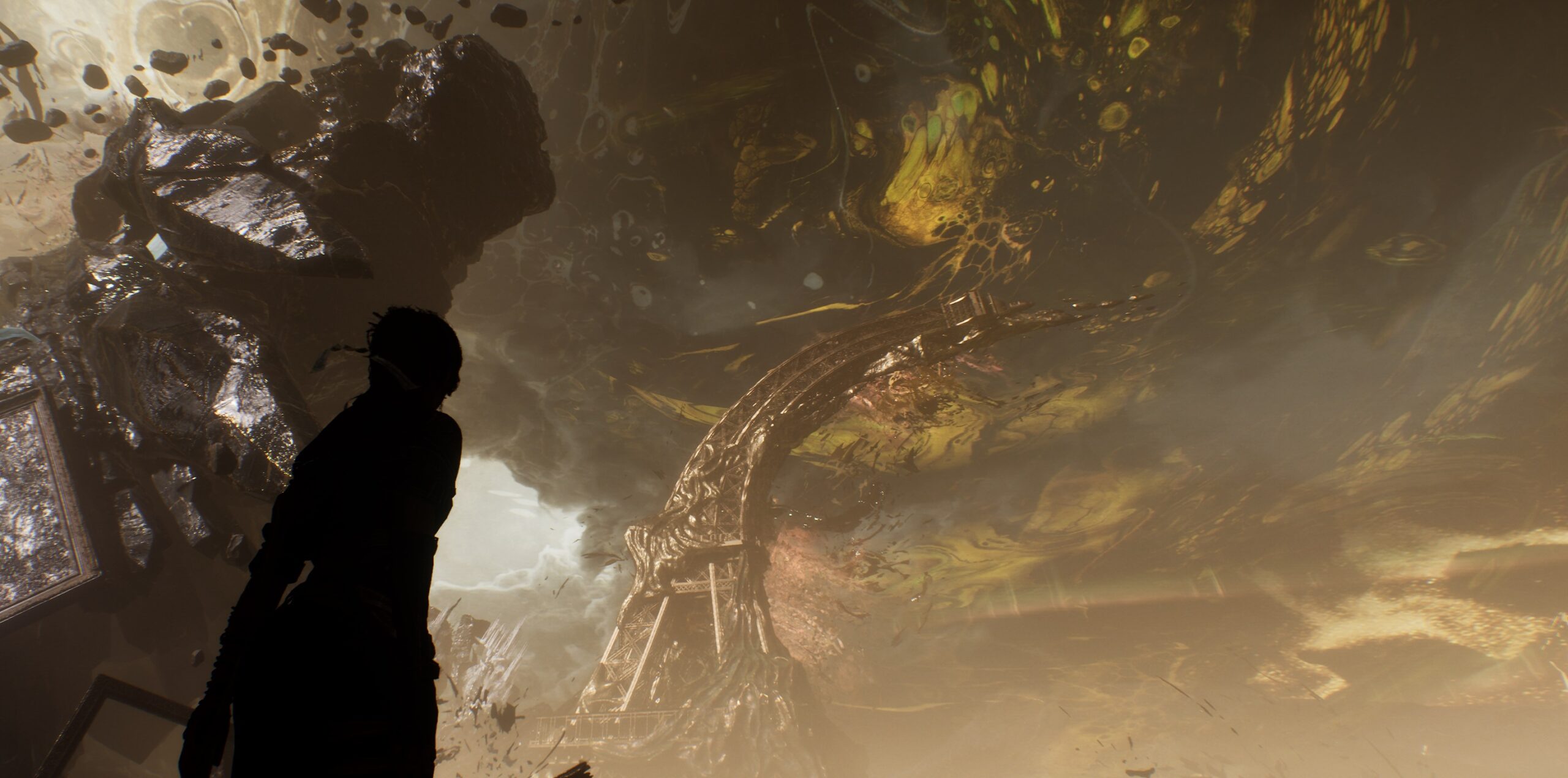
Expedition 33 has been described as a “JRPG” though being developed by a French studio because it is designed very similarly to traditional JRPGs with turn-based battles and robust progression systems for characters and equipment. It also was clearly influenced by games like Final Fantasy X and Lost Odyssey in particular with the game’s director acknowledging the latter. I am just guessing with the former due to the similarities with the story and thematic elements and I’m not the only one to notice. The soundtrack also had an influence with Expedition 33‘s Lettre à Maelle being noticeably similar to To Zanarkand from the opening of Final Fantasy X. A quick Internet search again confirms I’m not the only one to notice the similarities. Still, none of these similarities should lead one to jump to the conclusion the game is “ripping off” these titles as the game is different enough on it’s own and the director has openly shared the Japanese influences.
The combat though turn-based is different to both turn-based and real-time systems found in many JRPGs. Similar to Super Mario RPG and the Paper Mario and Mario & Luigi spin-offs that followed, the game integrates timed button mechanics into the combat and these aren’t just included for more player interaction. They are integral to the design with the easier of these allowing players to dodge attacks when timed right and dodging at least, will be important to pick-up from early on. The more difficult and more rewarding is the parry system which when successful often results in powerful counter-attacks. There is also the occasional prompt to jump and avoid enemy attacks. The special abilities of the various characters also have timed prompt and every character has a ranged attack that must be aimed manually and can be used to exploit enemy weaknesses or prevent certain attacks.
Every enemy has different timing involved in pulling off the dodge, parry and jump actions and it does take a bit of time and practice to get it right and necessary for players not playing on the easier difficulties usually reserved for game journalists. Parry in particular is important to practice as it can make fights a lot easier once mastered and is especially important in the latter parts of the game as well as for defeating the optional challenging enemies found in various parts of the game world. Incorporating successful parries along with special attacks is also immensely satisfying when attack after attack lands and the enemies own attacks are turned back on them. On the other hand, it can also be quite frustrating when you fail button prompts and see one or sometimes your entire party wiped out in a single turn.
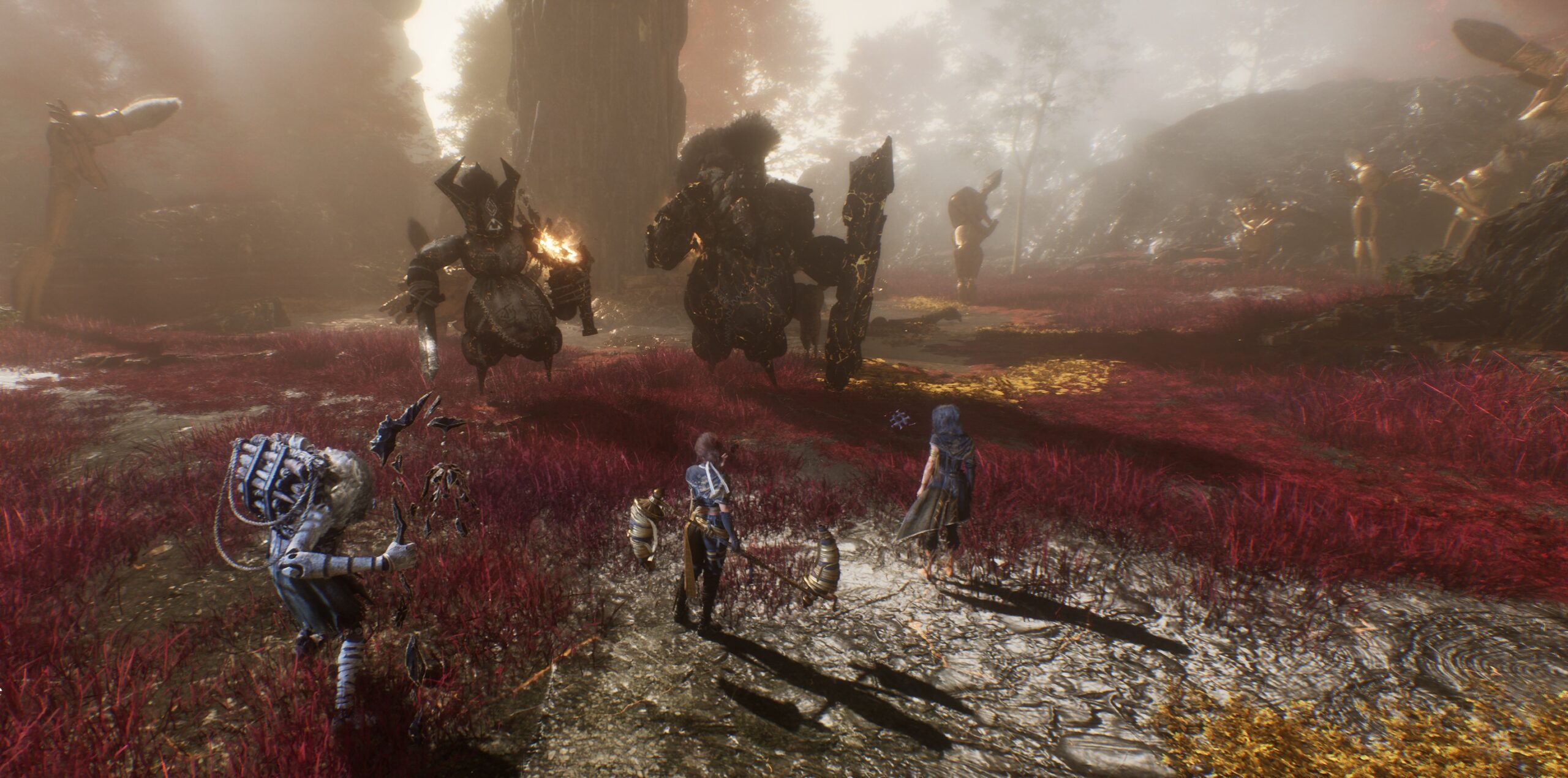
There are various upgrades to improve characters and straight levelling of stats while present, is not nearly as important as ‘Luminas’ which add to or enhance character abilities through items called ‘Pictos’. These do various things from adding elemental damage to attacks, restoring health and even risk/reward type bonuses. Although the game has plenty of tutorials, it is best to experiment from early on with these as it can still be confusing. While only three ‘Pictos’ can be equipped by a single character, the ‘Luminas’ from them can be used by other characters once mastered after being used in combat four times. Characters can gain more ‘Lumina’ points by earning them and through collectables found in the game world. Though character stats can be increased each level and there are plenty of weapons to acquire and upgrade, the Luminas are the most important part of character building. My general strategy in most RPGs is to find something that works and stick with it but even I found myself experimenting with the Lumina system once I had a better understanding. That many of the best Pictos are found hidden in the game world also encourages exploration.
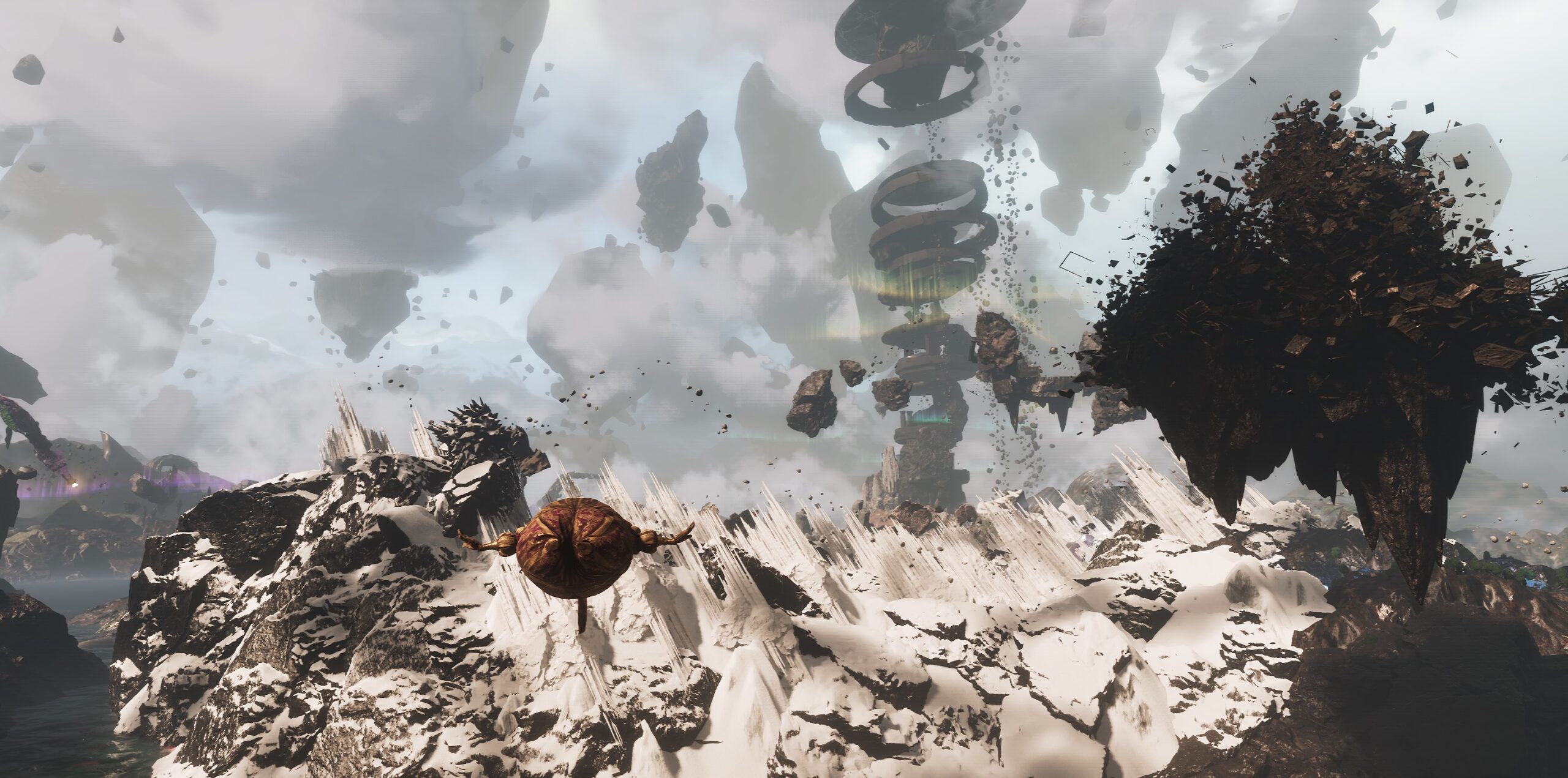
When I first began the game, I assumed it was going to be like modern Square-Enix games that have the player traversing extremely long corridors with the occasional detour for variety. The game is like this early on but opens right up after a few hours. Once the overworld is available, there is a lot more to explore and it opens up further as more abilities are unlocked including the use of a creature named Esquie that the party can use for transportation across the ocean and eventually through the air. It is in the overworld that many side activities are found too including some challenging boss battles, platforming challenges and other little distractions. The platforming challenges are more irritating than challenging as the movement is overly floaty and doesn’t work well outside of general traversal in the game world.
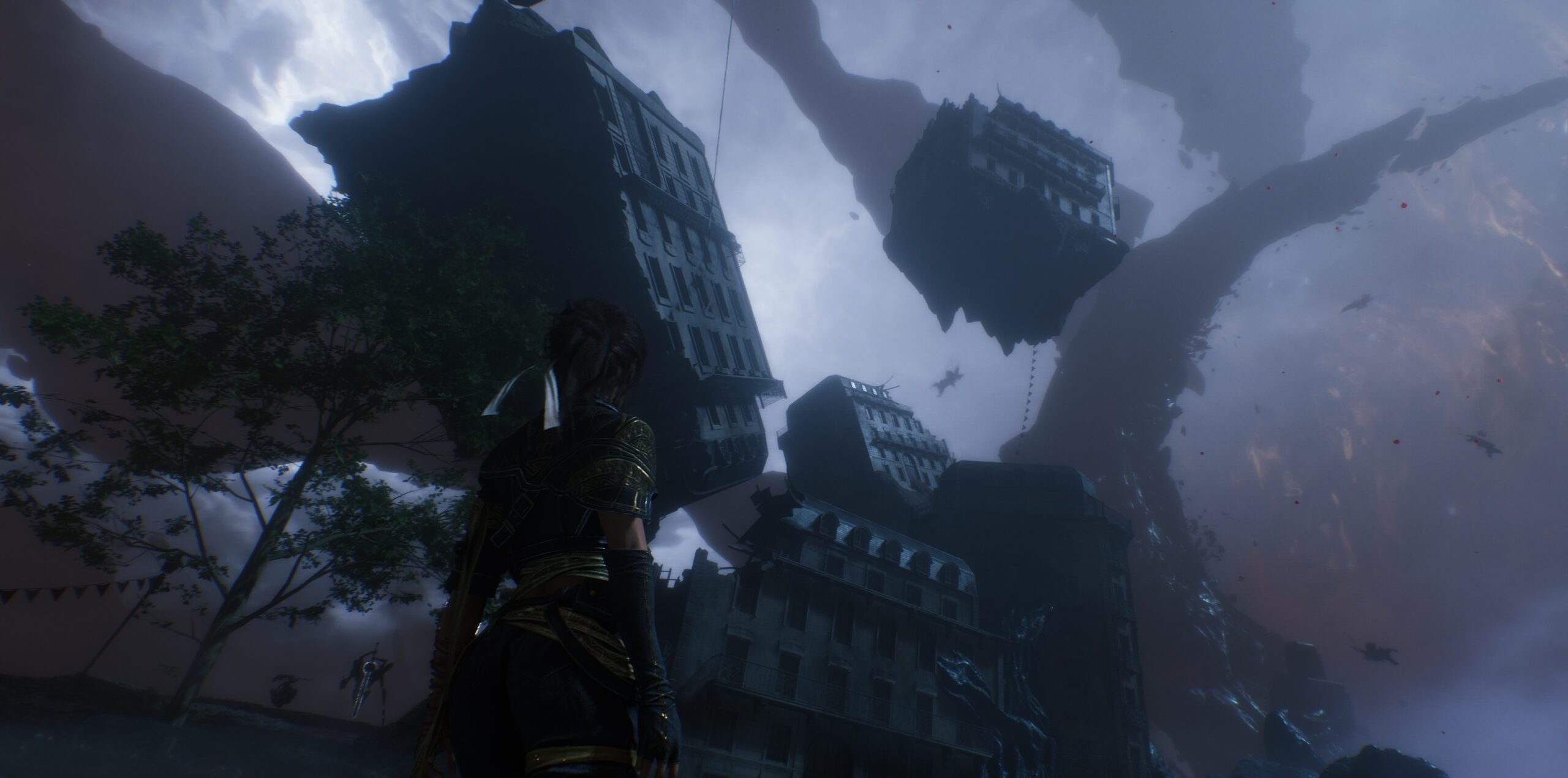
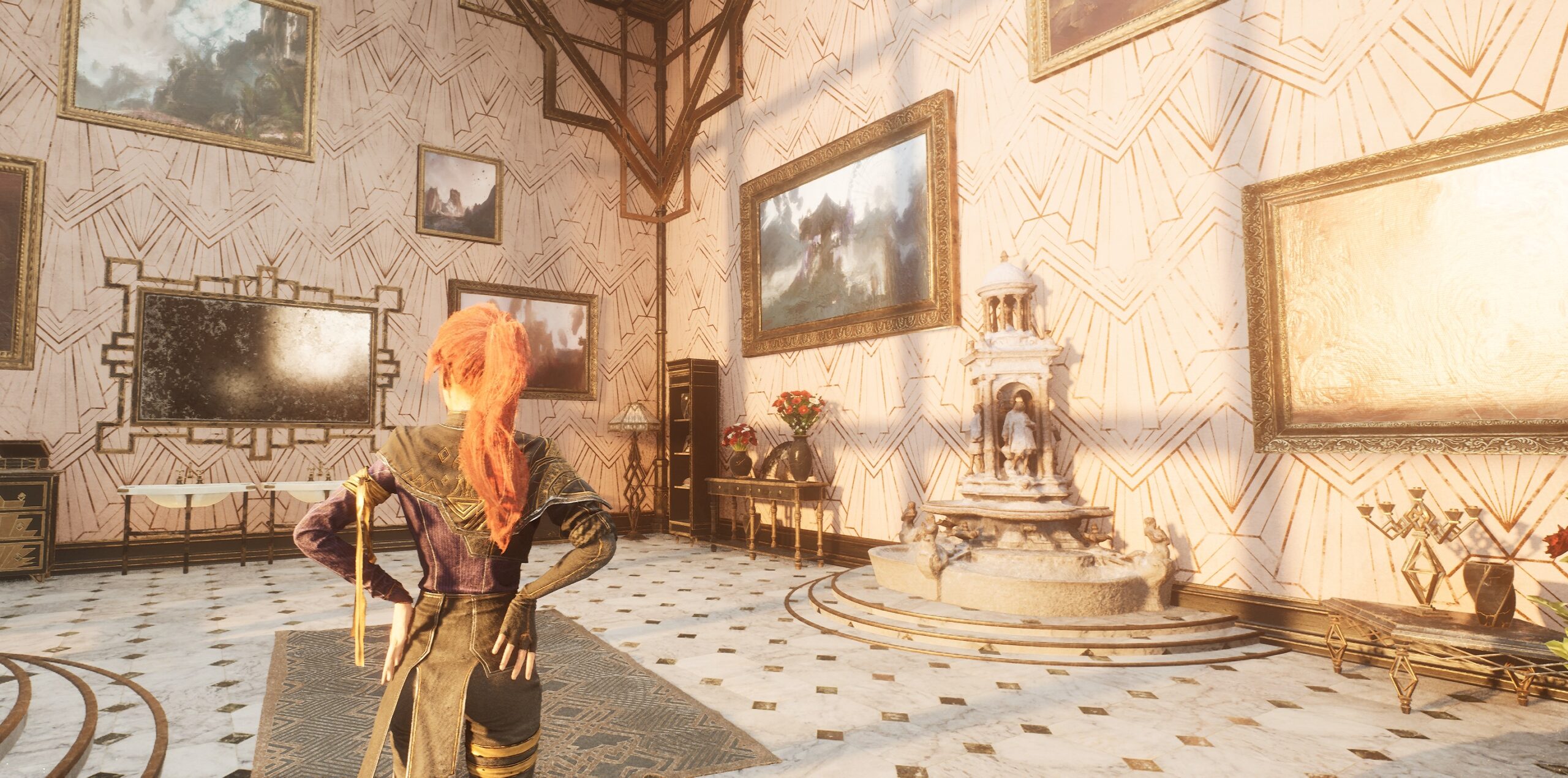
Expedition 33 is made using Unreal Engine 5 but one could be forgiven for thinking it was built on a proprietary engine as the art design really elevates the visuals. The characters and game world are simply beautiful and it is one of those games where you will stop and pan the camera around to marvel at the surroundings. The character models and animations are similarly excellent with expressive facial animation that is further enhanced by some quality voice acting. I did have issues with the game crashing when I first started it and though my PC was capable, I opted to reduce the visual detail which did make the game more stable. This was the only major technical issue I had.
I’ve briefly mentioned the soundtrack and the example track I linked to gives a good idea of what to expect. From my experience, it got better and better as I progressed. I was particularly impressed with many of the thumping orchestral battle and boss encounter themes. Even the more gentle piano tracks are a pleasure to listen to and I loved the game’s title theme as well.
Lastly, I want to re-iterate that this is not an “Indie” game by the accepted definition of that word in video games. Even the known details of the development should have disqualified it from consideration in that category for words. Even if you accept that it only had a ten million budget and a thirty man team, this may be small compared to most publishers but both the budget and the team working on it are considerably larger than the average independent studio. Are games with even smaller teams like the original Doom “Indie” now too? Obviously not. That the game also included Hollywood voice talent including Charlie Cox and Andy Serkis, should further put the studios ‘Indie’ credentials into question. This is not something simply to be dismissed either as the game could have done well if it had just been marketed as what it was and this will have negative ramifications for genuine Indie games if it is not addressed for future releases.
None of the above means it isn’t impressive when compared to the multi-million dollar disasters released over the last few years by larger studios. It really shows what a more constrained and motivated team can achieve with the right mix of ambition and talent. The major publishers proverbially strip-mining the IPs they own rather than trying to create something new, should take note. Clair Obscur: Expedition 33 is a very well-made game that deserves much of the praise it has received and is only let down by the narrative twist towards the game’s conclusion. This should be worth something from me as I went in expecting to be very underwhelmed.